
History of Noncommunicable Diseases Research Center (NCDRC)
Fasa University of Medical Sciences (FUMS) was founded in 1975 by Professor Ronaghi under the supervision of the World Health Organization (WHO), with the aim of conducting research in medical and paramedical sciences and training skilled physicians within a framework of social accountability. As a result, the medical school was referred to as a "school without walls" — symbolizing its limitless commitment to advancing medical knowledge.
Over time, with the addition of related academic programs, the institution evolved from a medical school into a full-fledged medical university. Based on the vision and emphasis of its founder, the Vice-Chancellery for Research and Technology at FUMS initially focused on addressing the health and research needs of the university’s local jurisdiction.
On December 6, 2014, FUMS received preliminary approval to establish the Noncommunicable Diseases Research Center (NCDRC), and full approval was granted on May 27, 2017. NCDRC has achieved remarkable ranks in terms of scientific output and mega-projects. It secured third place twice among 180 research centers younger than 10 years, and most recently in 2025, it ranked sixth among research centers with over 10 years of history in the country.
Among the center’s flagship national initiatives is the Fasa Persian Cohort Study, consisting of both adult and youth cohorts with a total of 13,000 participants. These studies, which were approved by the Vice-Chancellor of Research and Technology of the Ministry of Health, aim to identify risk factors associated with non-communicable diseases. Mental health disorders are also a major focus of the Youth Cohort Study. Another important NCDRC project involves disease registries. These were initiated by the university’s research vice-chancellor to investigate the leading causes of mortality, especially due to cardiovascular, neurological, and metabolic diseases.
Two integrated disease registries — FaRSH and FaRMI — have been established to document cases of systolic heart failure and myocardial infarction, respectively. The university has also rapidly advanced basic sciences research by recruiting faculty in diverse specialties across both basic and clinical medicine. Many projects are interdisciplinary and product-oriented, with a strong focus on molecular and cellular studies in biotechnology. Furthermore, in response to public interest, FUMS has devoted efforts to evidence-based research on the potential benefits and risks of traditional Iranian medicine, analyzing its practices over the past 1,000 years.
The Noncommunicable Diseases Research Center actively supports all regional, national, and international research aligned with the university's mission. The Vice-Chancellery strongly encourages international collaborations, recognizing their positive impact on both the quantity and quality of research output and the growing proportion of internationally published articles.
Two academic journals were also established under the Vice-Chancellery for Research and Technology:
-
Journal of Advanced Biomedical Sciences (JABS) https://jabs.fums.ac.ir/
-
The Galen Medical Journal https://journals.salviapub.com/index.php/gmj
Both journals now operate independently, publishing a significant number of high-quality medical research articles each year, contributing to knowledge dissemination within and beyond the academic community.
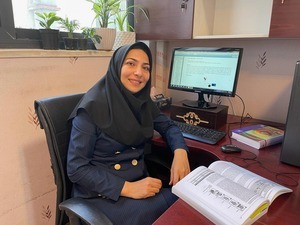
Head of Noncommunicable Diseases Research Center
Dr. Elham Zarenejad
Extension: 2433
Phone: 53314068
Email: El.zarenezhad@gmail.com
Education
Ph.D. in Chemistry
Postdoctoral Fellowship in Pharmaceutical Chemistry
Other members of NCRC:
Dr. Mohammad Mehdi Naghizade (PhD)
Dr. Mojtaba Farjam (MD and PhD)
Dr. Javad Jamshidi
- Please select news categories.
Choose blindless mode
Red blindness Green blindness Blue blindness [esprit:getsession:s_red_blind] Hard to see green Hard to see blue monochrome Special monochromeChange font size:
Change word spacing:
Change line height:
Change mouse: